Introduction: The Crisis of Circumstantial Faith
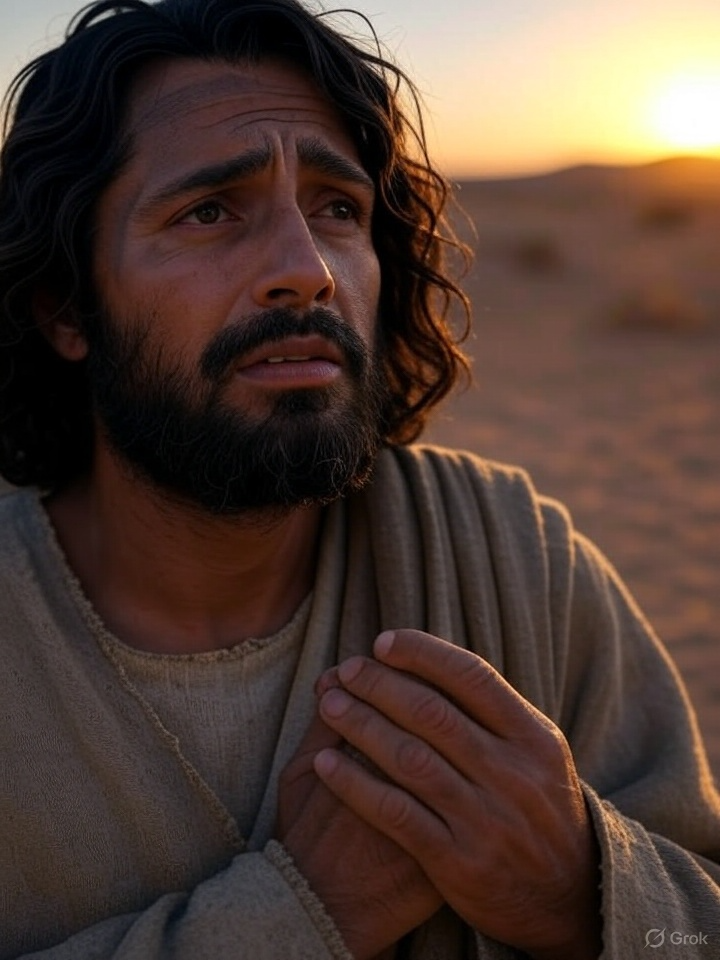
The messenger’s words cut through Job’s world like a blade. In rapid succession came the reports: the Sabeans had stolen his oxen and donkeys, lightning had consumed his sheep, Chaldean raiders had taken his camels, and—most devastating of all—a great wind had collapsed the house where his children feasted, killing them all (Job 1:13–19). Everything Job had built, everything he cherished, everything that marked his life as blessed vanished in a single afternoon.
Yet Job’s response defies human logic: “Naked I came from my mother’s womb, and naked shall I return. The Lord gave, and the Lord has taken away; blessed be the name of the Lord” (Job 1:21). In the Hebrew text, the verb bārak (“blessed”) carries the force of genuine praise, not resigned acceptance. Job does not merely submit to his circumstances—he worships through them.
This confession confronts a fundamental question that has shaped theological reflection for millennia: Does God’s worthiness of worship depend on his gifts to us, or does it rest on something deeper and more stable? The interpretive tradition reveals a consistent struggle with this question. Early church fathers like John Chrysostom marveled at Job’s response, calling it “a philosophy higher than all philosophy” (Homilies on Job 4). Medieval theologians like Thomas Aquinas found in Job’s words a demonstration of the summum bonum—that God himself is the supreme good that makes all other goods valuable (Summa Theologiae II-II, q.23, a.1). The Reformers pressed further. Calvin saw in Job’s confession a pattern for all Christian suffering, arguing that “true patience consists not in bearing adversity with a sullen heart, but in blessing God even in our afflictions” (Commentary on Job, 1.21). John Owen developed this theme extensively, arguing that worship which depends on circumstances reveals an idolatrous heart that values God’s gifts above God himself (The Glory of Christ, 8).
This study contends that Job’s confession rests not on stoic resignation or naive optimism, but on a theological understanding of God’s perfection and incomprehensibility so that we worship Him as the absolute source, sustainer, and final end of all existence. This truth grounds both our doctrine of divine providence and our practice of worship, enabling us to bless God’s name whether he gives or takes away.
I. The Foundation: God as the Absolute Origin of All Things
A. The Biblical Witness to Divine Primacy
Scripture establishes God’s absolute priority from its opening verse: “In the beginning, God created the heavens and the earth” (berē’šît bārā’ ‘ělōhîm) (Gen 1:1). The Hebrew construction emphasizes both temporal and logical priority. God precedes all things and serves as their ultimate explanation. The verb bārā’, used exclusively of divine activity in the Hebrew Bible, indicates creation ex nihilo—God bringing forth existence from nonexistence by his word alone.
This theme echoes throughout Scripture. Psalm 33:6 declares, “By the word of the Lord the heavens were made, and by the breath of his mouth all their host.” The psalmist emphasizes the effortless nature of divine creation—God speaks, and worlds appear. Isaiah 45:7 extends this creative power even to challenging circumstances: “I form light and create darkness, I make well-being and create calamity, I am the Lord, who does all these things.”
The New Testament deepens this understanding through its Christological focus. John 1:3 affirms that through the Word, “all things were made, and without him was not any thing made that was made.” Paul’s cosmic Christology in Colossians 1:16 specifies the scope: “For by him all things were created, in heaven and on earth, visible and invisible, whether thrones or dominions or rulers or authorities—all things were created through him and for him.”
B. Theological Development in the Early Church
The church fathers grasped the implications of this biblical teaching for understanding God’s relationship to creation. Augustine’s Confessions explores the psychological dimensions of creatureliness: “You have made us for yourself, and our heart is restless until it rests in you” (1.1). But Augustine also developed the metaphysical implications. In De Trinitate, he argues that all created being participates in existence through God’s eternal being. Creation has no independent standing; it exists only through divine sustenance.
This insight proved crucial for addressing various challenges to orthodox theology. Against Manichaean dualism, which posited evil as an independent principle, Augustine argued that evil represents a privation of good rather than a positive reality. Since God is the source of all positive being, and since God is perfectly good, evil cannot originate in God’s creative act. Rather, evil enters through the misuse of created freedom—a theme that would prove central to theodicy.
Athanasius developed similar themes in his anti-Arian writings. In Against the Heathen, he argues that creation’s dependence on God for existence means that creation cannot be divine. Only God exists necessarily; all else exists contingently through his will. This contingency, rather than diminishing creation’s value, actually establishes its proper dignity as God’s workmanship.
C. Medieval Synthesis and Thomistic Development
Thomas Aquinas provided the most systematic medieval treatment of these themes. His doctrine of creation builds on Aristotelian metaphysics but transforms it through biblical revelation. In the Summa Theologiae, Aquinas argues that God is not merely the first efficient cause but the source of being itself (esse) for all creatures (I, q.45, a.5).
This distinction proves crucial. Other causes produce changes in existing things, but only God gives existence itself. Creation is not like a craftsman working with pre-existing materials, but like a singer whose song exists only while he sings. Remove God’s sustaining power, and creation would instantly return to nothingness.
Aquinas also develops the relationship between God’s creative act and his providential governance. Since God creates through his intellect and will, creation reflects divine wisdom and purpose. This means that God’s sovereignty extends not only to creation’s beginning but to every moment of its existence and every detail of its development (I, q.22, a.2).
II. The Sustaining Power: God’s Continuous Creative Activity
A. Biblical Foundation for Divine Preservation
Scripture presents God’s relationship to creation not as a distant first cause but as an intimate, continuous sustaining presence. Hebrews 1:3 describes Christ as “upholding the universe by the word of his power” (pheron ta panta tō rhēmati tēs dynameōs autou). The present participle pheron indicates ongoing activity—not occasional intervention but constant sustenance.
Colossians 1:17 makes the same point: “He is before all things, and in him all things hold together” (en autō ta panta synestēken). The perfect tense suggests both completed action and continuing result. Christ’s relationship to creation is not merely historical but perpetually present.
Paul’s Areopagus address captures this beautifully: “In him we live and move and have our being” (Acts 17:28). The three verbs encompass the totality of creaturely existence. We do not simply exist in God’s presence; we exist through his continuing creative word.
Nehemiah 9:6 provides an Old Testament parallel: “You are the Lord, you alone. You have made heaven, the heaven of heavens, with all their host, the earth and all that is on it, the seas and all that is in them; and you preserve them all (wa’attāh meḥayyeh ‘et-kullām).” The verb ḥāyāh can mean “to give life” or “to preserve life,” suggesting that God’s creative activity continues in his preserving work.
B. Development of Providence
The tradition developed these biblical insights into a comprehensive doctrine of providence. Calvin’s Institutes argues that “it is not enough to embrace God once as Creator of the world unless we also grasp him as its perpetual governor” (1.16.1). Divine providence is not deistic oversight but active, detailed governance of all events.
Calvin distinguishes three aspects of providence: preservation (conservatio), cooperation (concursus), and governance (gubernatio). Preservation maintains creatures in existence moment by moment. Cooperation enables creatures to act according to their natures. Governance directs all events toward their appointed ends. This framework enabled Reformed theologians to affirm both divine sovereignty and creaturely responsibility. God’s providence does not override secondary causes but works through them. As the Westminster Confession states: “God from all eternity did, by the most wise and holy counsel of his own will, freely and unchangeably ordain whatsoever comes to pass: yet so, as thereby neither is God the author of sin, nor is violence offered to the will of the creatures” (III.1).
John Owen pressed this further, arguing that God’s providential control extends even to sinful actions. In his Display of Providence, Owen writes: “God has such an over-ruling hand in the sins of men, that he directs them to his own glory and the good of those that are his, without being himself the author of sin, or approving of it in the least degree.”
C. Contemporary Theological Perspectives
Modern theology has grappled with how to maintain divine sovereignty while acknowledging genuine creaturely freedom and natural causation. Herman Bavinck’s Reformed Dogmatics provides a nuanced treatment. Bavinck argues that divine providence operates through, not against, the natural order. God’s sustaining activity enables rather than overrides secondary causes.
Contemporary theologian Paul Helm has developed this theme, arguing that divine determinism is compatible with meaningful human choice because God determines not only events but the natures that choose them (Eternal God, 186). God’s decree encompasses both ends and means, ensuring that human choices are both genuine and governed by divine purpose. John Frame offers a similar perspective, emphasizing that God’s control operates through multiple “perspectives”—normative, situational, and existential. From each perspective, we see different aspects of how divine sovereignty and human responsibility intersect (The Doctrine of God, 321).
III. The Final End: God as the Ultimate Purpose of All Things
A. The Teleological Structure of Scripture
Scripture consistently presents God not merely as creation’s source and sustainer but as its ultimate purpose and goal. Romans 11:36 provides the most comprehensive statement: “For from him and through him and to him are all things” (hoti ex autou kai di’ autou kai eis auton ta panta). The preposition eis indicates movement toward a goal. All things exist not only from God and through God but for God.
First Corinthians 8:6 echoes this theme: “Yet for us there is one God, the Father, from whom are all things and for whom we exist (hēmeis eis auton), and one Lord, Jesus Christ, through whom are all things and through whom we exist.” Paul’s language suggests that our very being has a directional quality—we exist toward God as our proper end.
Colossians 1:16 applies this specifically to Christ: “All things were created through him and for him (eis auton).” Creation finds its purpose not in itself but in serving God’s glory through Christ. Proverbs 16:4 states this principle generally: “The Lord has made everything for its purpose (la-ma’anēhû), even the wicked for the day of trouble.”
B. Patristic Development of Teleological Themes
Early Christian theologians recognized that this teleological understanding of creation had profound implications for human life and worship. Augustine’s City of God argues that all history moves toward the ultimate goal of God’s glorification through the consummation of his kingdom. Human happiness (beatitudo) consists precisely in reaching this goal through the vision of God.
In his Confessions, Augustine explores the psychological dimensions of this teleology. The human heart’s restlessness apart from God reflects our creation for divine communion. Sin disorders this fundamental orientation, causing us to seek our ultimate good in created things rather than in God himself. Redemption reorders our loves, enabling us to use created goods while enjoying God alone.
Gregory of Nazianzus developed similar themes in his theological orations. In the Third Theological Oration, he argues that God creates not from need but from overflow of goodness. Creation’s purpose is to participate in divine glory through rational recognition and worship. This gives theological grounding to the praise offered by all creation in passages like Psalm 148.
C. Medieval Synthesis in Aquinas
Aquinas provided the most systematic treatment of creation’s teleological structure. In the Summa Theologiae, he argues that God is both the efficient cause (source) and final cause (goal) of all things. Since God acts through intellect and will, and since God’s intellect and will are perfectly ordered to his own goodness, all creation necessarily tends toward God as its ultimate end (I, q.44, a.4).
This has implications for understanding both natural and supernatural beatitude. Natural things seek God implicitly through seeking their own perfection, since all created perfection is a participation in divine goodness. Rational creatures can seek God explicitly through knowledge and love. The beatific vision represents the ultimate fulfillment of this created tendency toward God.
Aquinas also addresses how evil fits into this teleological framework. Since evil represents a privation of good, it cannot be directly intended by God. However, God can permit evil for the sake of greater goods, ultimately ordering even the disorder of sin toward the final goal of divine glorification. This provides the foundation for Paul’s claim that “God works all things together for good” (Rom 8:28).
IV. The Challenge of Evil: Theodicy and the Character of God
A. The Ancient Problem and Job’s Faith
The presence of evil and suffering poses the most serious challenge to belief in divine providence. If God is all-good, all-knowing, and all-powerful, why does evil exist? This question, formalized by philosophers as the “problem of evil,” finds its most profound biblical treatment in the book of Job. Job’s initial confession—”The Lord gave, and the Lord has taken away; blessed be the name of the Lord”—comes before his great trials of faith. As his suffering intensifies and his friends offer inadequate explanations, Job struggles with the apparent contradiction between God’s goodness and his experience of undeserved suffering.
The book’s structure reveals a careful treatment of theodicy. Job’s friends represent various attempts to explain suffering: Eliphaz suggests that suffering always follows sin (4:7–8), Bildad argues that God’s justice eventually prevails (8:3–7), and Zophar insists that Job must have hidden sins (11:6). Each explanation fails to account for Job’s genuine righteousness and undeserved suffering.
Job himself moves through various responses. He maintains his integrity against his friends’ accusations but struggles with God’s apparent injustice. His complaints crescendo in chapters 29–31, where he demands that God answer his charges. Yet even in his protest, Job never abandons faith in God’s ultimate justice: “I know that my Redeemer lives” (19:25).
B. Divine Response and Theodicy’s Limits
God’s response from the whirlwind (Job 38–41) does not directly answer Job’s questions about suffering. Instead, God displays his creative power and wisdom through a series of rhetorical questions. The effect is to place human suffering within the context of God’s cosmic governance. Job realizes that his perspective is limited, and he responds with humble worship: “I had heard of you by the hearing of the ear, but now my eye sees you; therefore I despise myself, and repent in dust and ashes” (42:5–6).
This pattern suggests that theodicy reaches inevitable limits. Human reason can offer partial explanations for evil—as Augustine’s privation theory demonstrates—but ultimately the problem requires trust in God’s character rather than complete rational resolution. This does not represent intellectual defeat but recognition of creaturely finitude.
The cross provides Christianity’s distinctive contribution to theodicy. God does not remain distant from human suffering but enters into it through the incarnation. Christ’s passion reveals both the reality of evil’s horror and God’s commitment to redemptive transformation. As Calvin notes, “We could not believe with certainty that we are God’s children unless we saw him take upon himself our infirmities” (Institutes 2.12.1).
C. Perspectives on Divine Decree and Evil
Reformed theology has wrestled particularly intensely with how to maintain divine sovereignty while avoiding making God the author of sin. The Westminster Confession’s formulation represents careful theological reflection: God “freely and unchangeably ordain[s] whatsoever comes to pass: yet so, as thereby neither is God the author of sin, nor is violence offered to the will of the creatures” (III.1). This paradoxical formulation reflects biblical tensions found in passages like Acts 2:23, where Peter declares that Jesus was “delivered up according to the definite plan and foreknowledge of God,” yet “you crucified and killed by the hands of lawless men.” Divine decree and creaturely responsibility coexist mysteriously.
John Owen developed this theme extensively. In his Display of Providence, he argues that God’s decree encompasses not only events but the means by which they occur. God ordains that sinful acts occur through the sinful choices of responsible agents. This preserves both divine sovereignty and human accountability.
Contemporary Reformed theologian Paul Helm has refined this position, arguing that divine determination operates through secondary causation rather than overriding it. God determines events by determining the natures that cause them. This enables genuine creaturely choice within the framework of divine decree (Eternal God, 211).
V. Worship Through Suffering: The Heart of Job’s Confession
A. The Nature of Circumstantial vs. Essential Worship
Job’s confession reveals two fundamentally different approaches to worship. Circumstantial worship treats God’s gifts as the ground of his worthiness. When gifts abound, such worship flourishes. When gifts are withdrawn, such worship withers. This represents a subtle but devastating form of idolatry—valuing God for what he provides rather than for who he is.
Essential worship, by contrast, finds its ground in God’s character and being. Such worship can persist through loss because it does not depend on external circumstances. Job exemplifies this when he blesses God’s name in taking as well as giving. His worship rests on God’s identity as the sovereign Lord who gives meaning to both gift and loss.
Calvin recognized this distinction, arguing that “true faith is not that which withdraws from Christ because of the cross, but that which cleaves more closely to him” (Commentary on John 6:66). The cross tests whether our attachment is to Christ himself or merely to his benefits. Job’s testing serves a similar function—revealing whether his piety rests on blessing or on the God who blesses.
John Owen developed this theme in his treatise On Communion with God. Owen argues that communion with the Father particularly involves receiving his love, communion with the Son involves grace, and communion with the Spirit involves comfort. Yet all three persons of the Trinity are to be enjoyed for themselves, not merely for their gifts. This trinitarian framework deepens our understanding of essential worship.
B. The Role of Divine Hiddenness
Job’s experience includes not only material loss but spiritual darkness. God seems absent precisely when most needed. This theme of divine hiddenness (deus absconditus) appears throughout Scripture. The psalmist cries, “How long, O Lord? Will you forget me forever?” (Ps 13:1). Even Christ experiences abandonment on the cross: “My God, my God, why have you forsaken me?” (Matt 27:46).
Yet Scripture presents this hiddenness not as divine cruelty but as a means of spiritual maturation. Isaiah 45:15 declares, “Truly, you are a God who hides himself, O God of Israel, the Savior.” The context suggests that God’s hiddenness serves his saving purposes. Sometimes God must withdraw the sense of his presence to deepen our faith beyond mere feeling.
The Puritan tradition particularly explored this theme. John Owen’s Treatise on Temptation argues that God sometimes “leaves” believers to test and strengthen their faith. William Guthrie’s The Christian’s Great Interest suggests that divine withdrawals drive us to seek God more earnestly. Richard Sibbes’s The Bruised Reed finds comfort in God’s faithfulness even when unfelt.
Luther’s distinction between the deus revelatus (revealed God) and deus absconditus (hidden God) provides helpful theological framework. In Christ, God has revealed himself as gracious and merciful. Yet this revelation does not eliminate mystery. Faith must cling to revelation even when experience suggests divine absence or hostility.
C. The Community of Suffering and Worship
Job’s experience connects him to a broader biblical community of suffering saints. Abraham worshiped while sacrificing Isaac (Gen 22:5). David praised God while fleeing Saul (Ps 34:1). Jeremiah blessed God while lamenting Jerusalem’s destruction (Lam 3:22–23). Paul and Silas sang hymns in prison (Acts 16:25).
This pattern suggests that worship through suffering is not exceptional but normative for God’s people in a fallen world. First Peter 4:12–13 instructs believers: “Beloved, do not be surprised at the fiery trial when it comes upon you to test you, as though something strange were happening to you. But rejoice insofar as you share Christ’s sufferings, that you may also rejoice and be glad when his glory is revealed.”
The writer of Hebrews develops this theme extensively. The “hall of faith” in chapter 11 celebrates those who maintained faith despite not receiving promised earthly vindication. Their worship was oriented toward “a better country, that is, a heavenly one” (11:16). Present suffering gains meaning through future hope.
This communal dimension enriches individual suffering. We do not suffer alone but as part of Christ’s body. Our pain participates in his passion, and our hope shares in his resurrection. This gives theological weight to Paul’s mystical language: “I rejoice in my sufferings for your sake, and in my flesh I am filling up what is lacking in Christ’s afflictions for the sake of his body, that is, the church” (Col 1:24).
VI. Providence and Care: Implications for Christian Living
A. Comfort in God’s Sovereign Purpose
The doctrine of divine providence, properly understood, provides profound comfort for believers facing trials. Romans 8:28 anchors this comfort: “And we know that for those who love God all things work together for good, for those who are called according to his purpose.” The promise does not eliminate suffering but assures us that suffering serves divine purpose.
This comfort rests not on our ability to discern God’s purposes but on the character of the God whose purposes they are. When Joseph reveals himself to his brothers, he interprets their evil intentions through divine providence: “As for you, you meant evil against me, but God meant it for good, to bring it about that many people should be kept alive, as they are today” (Gen 50:20). The same event serves both human malice and divine mercy.
Contemporary pastoral theology has sometimes muted this comfort by emphasizing divine love while minimizing divine sovereignty. Yet biblical comfort consistently appeals to God’s power over circumstances. The psalmist finds peace not because God sympathizes with his pain but because God reigns over his enemies: “The Lord sits enthroned over the flood; the Lord sits enthroned as king forever” (Ps 29:10).
B. The Call to Patient Endurance
Providence also calls believers to patient endurance rather than desperate activism. If God truly governs all events, we can wait for his timing rather than forcing our own solutions. James 5:7–8 applies this to Christian living: “Be patient, therefore, brothers, until the coming of the Lord. See how the farmer waits for the precious fruit of the earth, being patient about it, until it receives the early and the late rains. You also, be patient. Establish your hearts, for the coming of the Lord is at hand.”
This patience is not passive resignation but active trust. It involves continued faithfulness in ordinary duties while waiting for God’s extraordinary interventions. The Hebrew midwives demonstrate this pattern by faithfully serving God within unjust structures while trusting him for protection (Exod 1:15–21).
The Puritan tradition particularly emphasized this aspect of providence. Richard Baxter’s The Saints’ Everlasting Rest argues that earthly trials prepare believers for heavenly glory. Present suffering trains us to value eternal over temporal goods. John Bunyan’s Pilgrim’s Progress dramatizes this through Christian’s journey from the City of Destruction to the Celestial City.
C. Wisdom in Human Planning
Providence does not eliminate human planning but places it within proper theological context. Proverbs 16:9 captures this balance: “The heart of man plans his way, but the Lord establishes his steps.” We must plan as if success depended entirely on us while trusting as if it depended entirely on God.
James 4:13–15 applies this principle to business planning: “Come now, you who say, ‘Today or tomorrow we will go into such and such a town and spend a year there and trade and make a profit’—yet you do not know what tomorrow will bring. What is your life? For you are a mist that appears for a little time and then vanishes. Instead you ought to say, ‘If the Lord wills, we will live and do this or that.'” Proper planning acknowledges both human responsibility and divine sovereignty.
This balance appears throughout the biblical narrative. Nehemiah prays for success but also organizes the rebuilding work carefully (Neh 2:4–8). Paul plans missionary journeys but remains flexible when God redirects his plans (Acts 16:6–10). Jesus instructs disciples to count the cost before building but also to trust God for provision (Luke 14:28–30; Matt 6:25–34).
VII. Doxological Conclusion: The End of All Theology
A. Worship as the Goal of Providence
The ultimate purpose of divine providence is not human happiness but divine glory manifested through the worship of redeemed creation. This doxological focus appears throughout Scripture. Ephesians 1:3–14 traces election, redemption, and sealing “to the praise of his glorious grace” (v.6), “to the praise of his glory” (v.12), and “to the praise of his glory” (v.14). Divine purpose is fundamentally worshipful.
Romans 11:33–36 concludes Paul’s treatment of God’s mysterious ways with pure doxology: “Oh, the depth of the riches and wisdom and knowledge of God! How unsearchable are his judgments and how inscrutable his ways! ‘For who has known the mind of the Lord, or who has been his counselor?’ ‘Or who has given a gift to him that he might be repaid?’ For from him and through him and to him are all things. To him be glory forever. Amen.”
This doxological conclusion is not an addendum to theology but its proper climax. Systematic theology finds its fulfillment not in comprehensive explanation but in adoring worship. The goal of understanding providence is not to master divine mystery but to be mastered by divine majesty.
B. Job’s Legacy: Worship as Theological Method
Job’s confession—”The Lord gave, and the Lord has taken away; blessed be the name of the Lord”—provides not only a model for suffering saints but a methodological principle for theological reflection. Proper theology begins, continues, and ends in worship. When we approach divine mystery with doxological hearts, we are more likely to maintain proper perspective on the limits of human understanding.
This doxological method appears throughout the theological tradition. Augustine’s Confessions combines rigorous theological reflection with passionate prayer. Anselm’s Proslogion develops the ontological argument within the context of worship. Calvin structures his Institutes to lead readers from knowledge of God to knowledge of themselves and ultimately to grateful obedience.
Contemporary theology benefits from recovering this doxological dimension. When systematic theology becomes purely academic exercise divorced from worship, it loses its proper moorings. The doctrine of providence especially requires humble adoration because it deals with mysteries that exceed human comprehension while addressing struggles that pierce human hearts.
C. The Eschatological Horizon
Job’s worship gains its ultimate vindication not in his earthly restoration (Job 42:10–17) but in the eschatological hope that animates all biblical faith. First Corinthians 15:28 describes the final goal: “When all things are subjected to him, then the Son himself will also be subjected to him who put all things in subjection under him, that God may be all in all.” The end of all history is the universal recognition of divine supremacy.
Revelation 4–5 provides a vision of this ultimate worship. The twenty-four elders cast their crowns before God’s throne, saying, “Worthy are you, our Lord and God, to receive glory and honor and power, for you created all things, and by your will they existed and were created” (4:11). The Lamb receives similar worship: “Worthy is the Lamb who was slain, to receive power and wealth and wisdom and might and honor and glory and blessing!” (5:12).
This eschatological vision transforms present suffering. Our tears gain meaning as birth pangs of coming glory (Rom 8:22–23). Our worship through trials anticipates the endless worship of consummated redemption. Job’s confession echoes through all of salvation history, finding its fulfillment when every knee bows and every tongue confesses that Jesus Christ is Lord, to the glory of God the Father (Phil 2:10–11).
Conclusion: The Theological Heart of Worship
Job’s confession, “The Lord gave, and the Lord has taken away; blessed be the name of the Lord,” encapsulates the theological foundation of authentic worship. This worship rests not on circumstances but on the character of God as the absolute source, sustainer, and final end of all existence. Such worship can persist through loss because it finds its ground in God’s essential nature rather than his contingent gifts.
The interpretive tradition has consistently recognized this truth while struggling to maintain it under pressure. Augustine’s privation theory of evil, Aquinas’s synthesis of efficient and final causation, Calvin’s doctrine of providence, and Owen’s treatment of divine decree all attempt to preserve God’s absolute sovereignty while accounting for genuine creaturely experience.
Contemporary believers face the same challenge Job faced: Will we worship God only when he blesses, or will we bless his name whether he gives or takes away? The answer depends on whether we understand God as one good thing among others or as the Good itself in which all particular goods participate.
The cross of Christ provides both the supreme example and the enabling power for such worship. There God’s love and justice meet in perfect harmony. There divine sovereignty and human responsibility find their ultimate reconciliation. There worship through suffering receives its deepest motivation and its certain hope.
Therefore, with Job and with the whole company of heaven, we confess: “The Lord gave, and the Lord has taken away; blessed be the name of the Lord.” This confession is not mere resignation but theological worship—the recognition that God’s glory is the purpose for which we were created and the hope in which we find our deepest joy.
 Donnie's Dogmatics